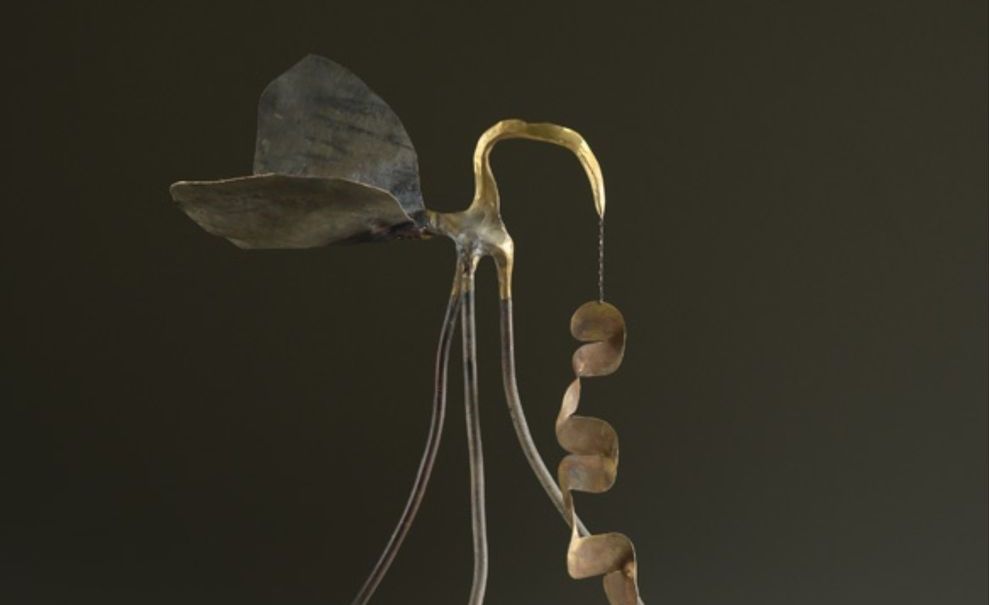
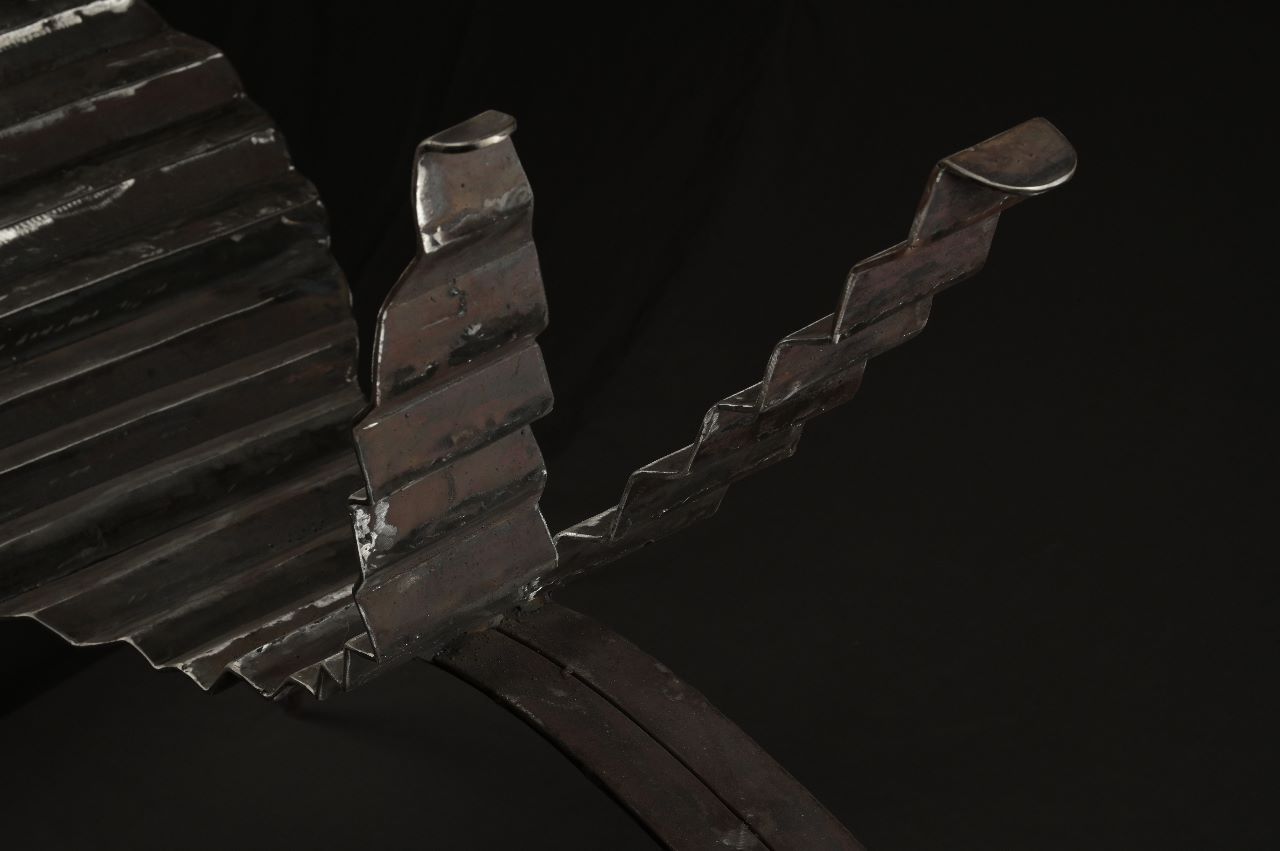
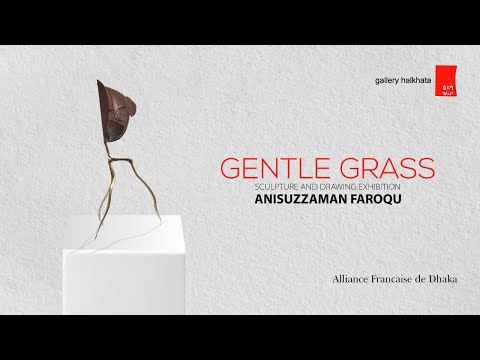
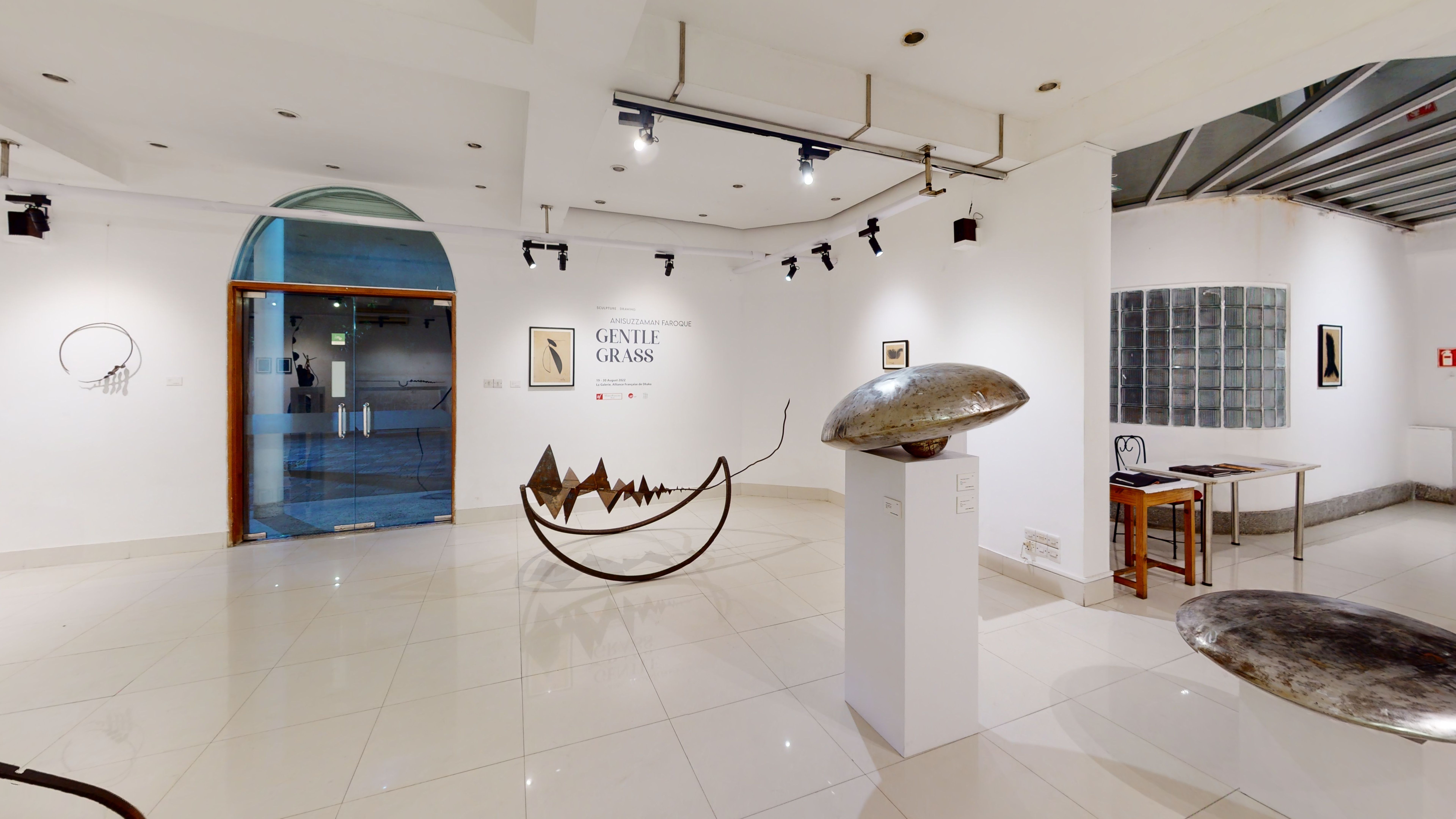
GENTLE GRASS, the first solo exhibition of young Bangladeshi sculptor-painter Anisuzzaman Faroque, opened at Alliance Française de Dhaka in association with ARTCON and Studio III. The exhibition features 24 sculpture-based works and nine charcoal drawings, reflecting Faroque’s exploration of nature, rhythm, and abstraction. Inspired by everyday life and natural elements such as wind, water, and the moon, his metal-sheet sculptures and expressive drawings create a poetic dialogue between organic forms and contemporary sculptural language. The exhibition was inaugurated by Professor Hamiduzzaman Khan, Professor Lala Rukh Selim, and Professor Manosh Chowdhury, and also marked the launch of the book Gentle Grass, published by ARTCON.
Sculpture . Drawing
GENTLE GRASS
Anisuzzaman Faroque
""
Discover our stories
“Gentle Grass takes a frozen form of unspoken poetry; like a spontaneous melody, the sculptures remain free flowing.”


“With a hard cold material: metal, he tried to portray a soft sensitivity like elevating a lone blade of grass to an icon.”
INTRODUCTION
Arham ul Huq Chowdhury
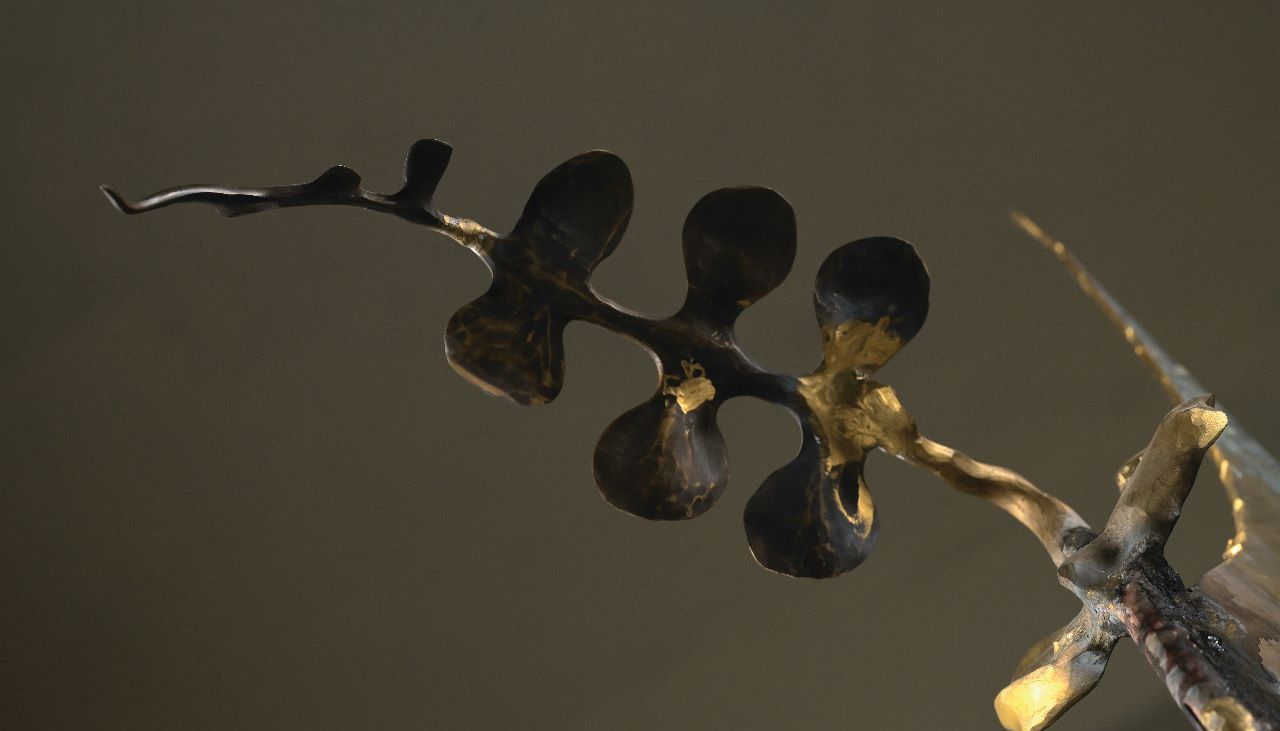
Gentle Grass, a sculpture series presented here by Anisuzzaman Faroque takes a frozen form of unspoken poetry, like spontaneous melody they are free flowing. With a hard cold material: metal, he tried to portray a soft sensitivity like elevating a lone blade of grass to an icon. The mood of which can also be felt in the solid and delicate positioning in his charcoal drawings included in the book. This series tends to captivate that core element, like the piece ‘Underwater Iron Plant’ – the form deriving from sea-washed nature where Faroque’s formulative years were developed. In many stances, elongated limbs influenced by surrealistic style can be felt in his both organic and inorganic element pieces like, ‘Hanging Moon’ or ‘Very Complicated Chair’. Forms often take kinetic movement developing naturally, like ‘Flying Iron Wings I & II’: where limited material is fashioned to give a far bigger form. In some works, combination of metals are used to bring out the character of the piece, such collaborations are seen in few of the pieces like ‘Special Child I & II’ or ‘Orchid Flower in Bird’s Beak’. Another characteristic can be noticed in his various representation of grass, where instead of being presented in its full glory, torn and distorted blades of grass is magnified to capture its composition in the aftermath.
A publication comes as a presentation from ARTcon as a facilitation to the promising journey of Anisuzzaman’s sincere and relentless search and efforts to establish in formulating his own unique forms, with the wishes for a long creative path.
___ Arham ul Huq Chowdhury is an Environment and heritage practitioner / anthropologist / artist and advisor to ARTcon.
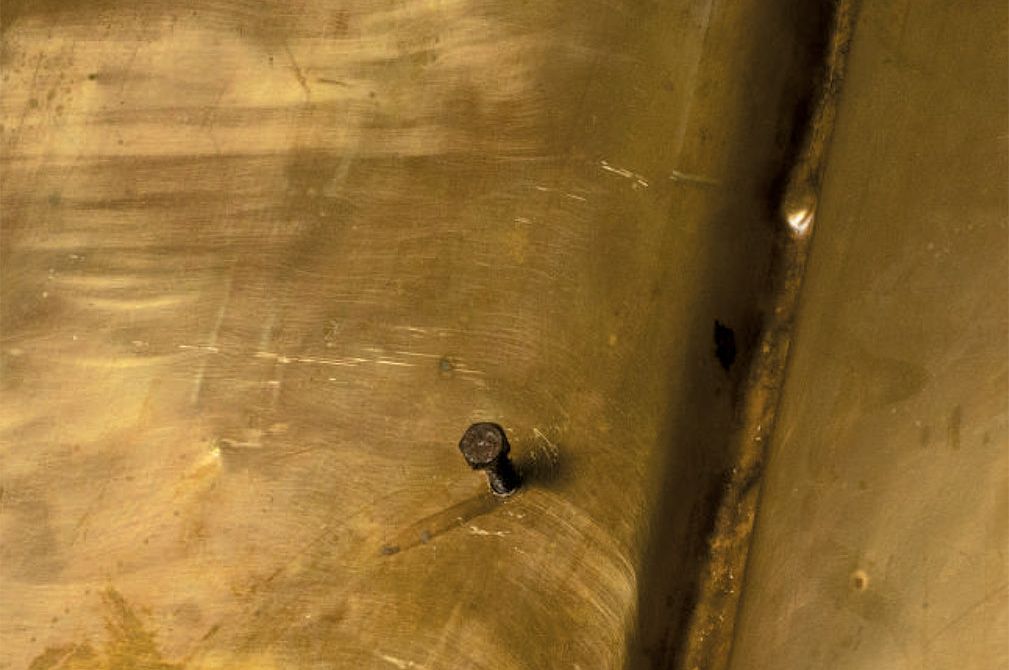
“Many things around me become the medium through which I transform experience into art.”
Anissuzzaman Faroque
b. 1993

S. M. Saha Anisuzzaman Faroque was born in Moheshkhali, Cox’s Bazar, Bangladesh, in 1993. An emerging visual artist who has mastered himself as a sculptor, his representational and sketch portrait modelling with clay is one of his outstanding skills. In his practice, line drawing plays a vital role, which he picks up from the urban lifestyle, and he incorporates it in his creation of postmodern sculptures. Anisuzzaman received his Bachelor’s degree in 2015 and completed his Master’s in 2018 at the Department of Sculpture, Faculty of Fine Arts, University of Dhaka. Anisuzzaman participated in many group exhibitions, including Qingdao Invitational Art Exhibition, China; Young Artist Art Exhibition, Bangladesh Shilpakala Academy, Dhaka; Asian Art Biennale Bangladesh, National Sculpture Exhibition, Bangladesh Shilpakala Academy; Taiwan Annual 3rd, AVAT. Anisuzzaman has achieved numerous awards including ‘Sculpture Best Award’ at the 21st Young Artists Art Exhibition organised by Bangladesh Shilpakala Academy in 2018 and ‘Experimental Best Award’ in 2017 at the Annual Art Exhibition organized by Faculty of Fine Art, University of Dhaka. His works are in the collection and are commissioned by the government and private organisations, which include the Bangladesh National Museum, University of Dhaka, State Guest House-Padma, Kazi Nazrul Islam Memorial Hall-BSMMU, Kumudini Women’s Medical College & Hospital, and many private collections at home and abroad.
Artist Statement
The works presented in this exhibition are part of various experiences from the past several years. From my institutional years until now, over the last twelve years, many important decisions of my artistic life have been determined. Various events and unexpected occurrences have all taken place under my own responsibility.
Placing the desire to become an artist at the center, I began my artistic journey. Many things happening around me gradually became media through which I wished to transform experiences into the form of art. What I observe around me often takes visible shape—both figurative and abstract—through solid materials and different media, according to my own intention.
I determine what becomes art from what I see and what inspires me. Sometimes I feel that a work succeeds, and sometimes it does not. The naming of a work often carries an idea of its purpose. I do not see art and my way of living as separate from each other. All of my artworks are part of my lived life.
My aim is to observe life and nature in a simple way and to create art from that simplicity.
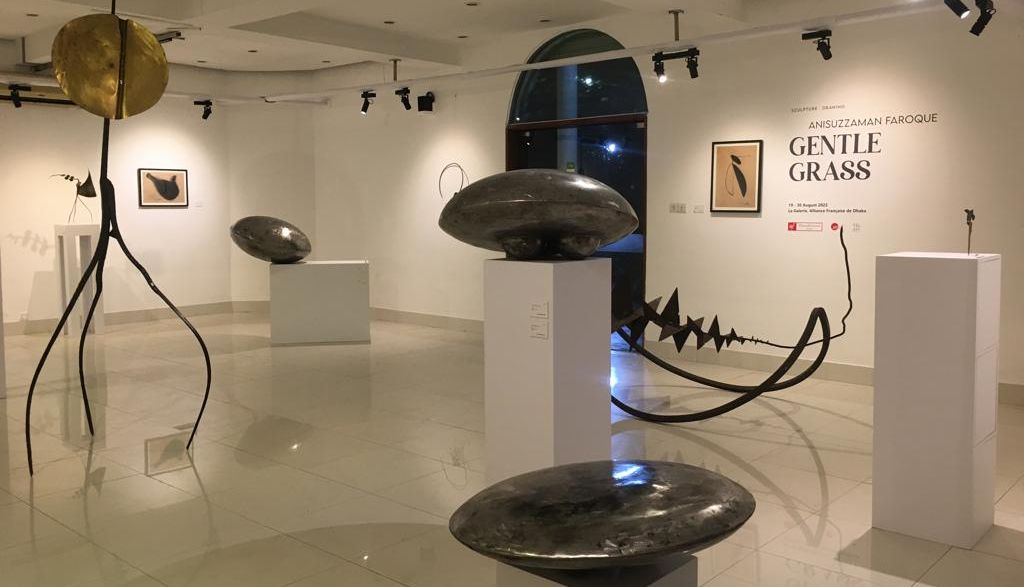
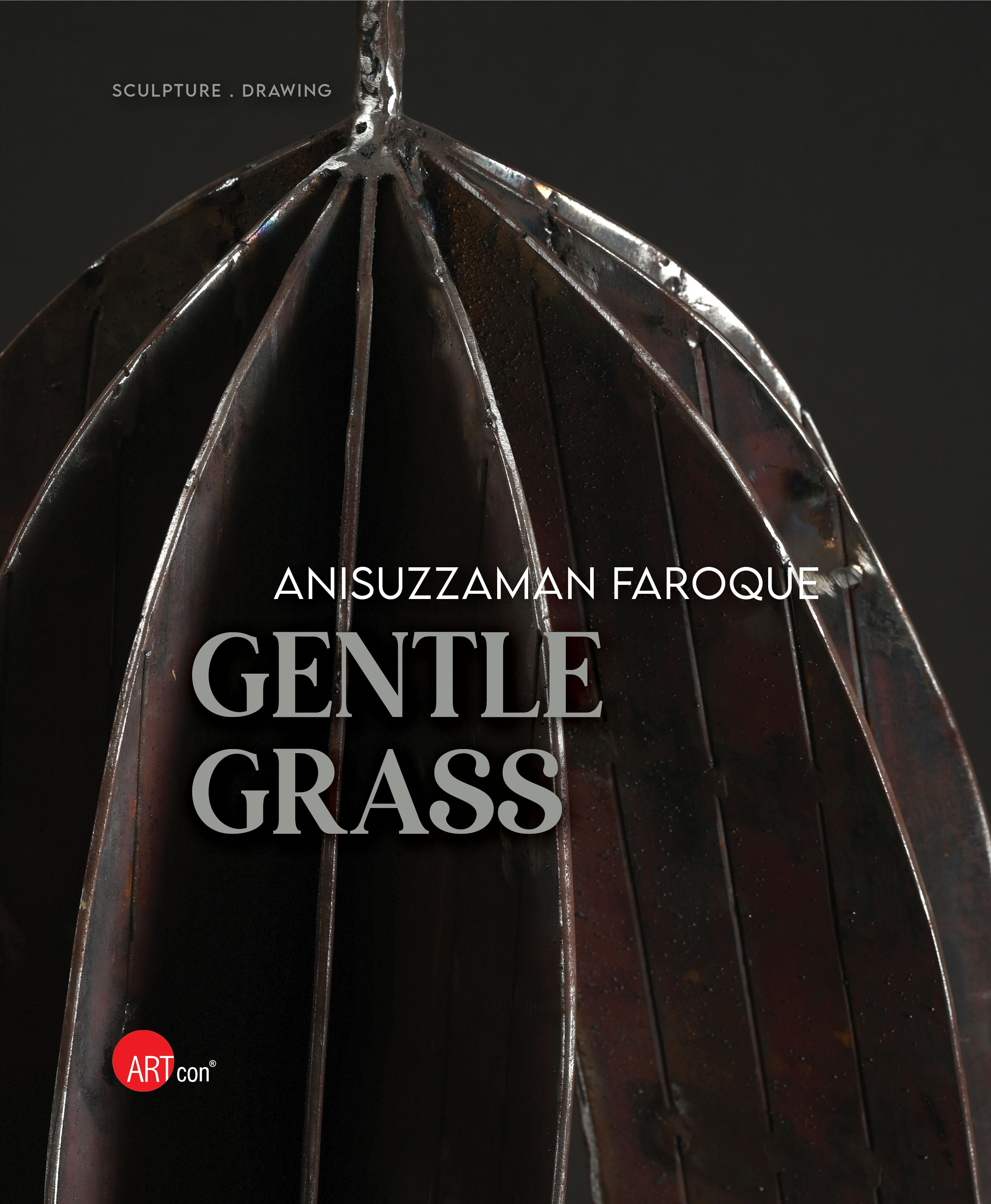
This book is a compilation of images of a metal sculpture series, Gentle Grass, by Anisuzzaman Faroque, along with a few of his charcoal drawings and some anecdotes reflecting on the works. The sculptures presented here are a result of persistent efforts encompassing to capture the soft sensitivity in combination of various hard metals. The works in this book are in the sculptor’s words, are a part of his various personal experiences and journey from the beginning to formulating his artist life.
“A certain harshness appears in his works, yet the artist never allows it to dominate.”
Gentle Soft, Yet Dynamic and Upright
Manosh Chowdhury
My acquaintance with the works of Anisuzzaman Faroque happened rather unexpectedly. Had ARTCON not been close to me, this introduction might never have taken place. In Dhaka, my encounters with people from painting, architecture, fine arts, or literature are often accidental—perhaps this is true for everyone. Yet the ways in which literature and fine arts circulate and communicate are quite distinct. Because of that system, one eventually encounters the work of a writer or an artist in some way or another. But in the case of painting or sculpture, such encounters are less likely; we usually have to visit galleries or exhibition spaces to connect with these artists.
Faroque’s first solo exhibition presents both drawings and sculptures, executed respectively in charcoal and metal. The drawings serve as testimonies to the artist’s sculptural sensibility; in fact, they appear almost as two-dimensional echoes of sculpture itself. In this publication, the inclusion of these four drawings before the photographs of the sculptures provides a compelling introduction for the viewer.
Faroque’s gentle or humble grass essentially begins with a single work—the first piece of the series. From that work emerges the spirit that justifies the title of this publication. The softness suggested by grass extends beyond the subject itself and permeates many of his other works. Softness becomes a fundamental and unique quality of these sculptures. Even when his works move away from the literal imagery of grass, they continue to carry its resonance through a grammar of tenderness—sometimes appearing in aquatic plants, sometimes in orchids, and sometimes in a hanging moon.
Works such as “Special Child I & II,” “Very Complicated Chair,” and certain untitled pieces depart somewhat from the exhibition’s central conceptual terrain, yet they captivate the viewer with remarkable depth. By contrast, works like “Grass Flower I & II,” “Iron Leaf,” “Diakul,” “Three Types of Surfaces I & II,” and “Flying Iron Wings” map out a landscape of softness and humility—perhaps as much in the realm of imagination as in geometry.
In this context, “Nocturnal of the Wetland” becomes a fascinating inclusion. Though somewhat ominous in character, its geometric composition allows it to integrate seamlessly within the exhibition. A certain harshness or intensity appears in several of Faroque’s works, yet the artist never allows it to dominate uncontrollably. This restraint seems not merely a curatorial decision but rather a signature of his artistic language.
Mixed metals also appear in Faroque’s works, yet he repeatedly retains iron in the naming of many pieces. The word “iron,” almost like an unnecessary adjective, creates a distinctive linguistic tone—perhaps even a subtle pun. The irony is gentle rather than sharp; the term “iron” becomes a decorative yet charming ornament within these soft, grass-like forms.
At times, the use of mixed metals reveals a pair of bronze moons that shine with striking brilliance. For viewers from the Bengali cultural sphere, these moons may evoke poetic memories of Sukanta and Jibanananda—soft, sweet, tranquil, hanging moons, yet intensely present and concentrated.
Meanwhile, “Orchid Flower in Bird’s Beak” is an astonishing imaginative vision—almost unimaginable in its delicacy. It is magical, enchanting, and serene. In contrast, “Mammoth, Horse, Others and I” is profoundly unsettling. Its movement, tension, and form create a pause in perception. It is not exactly terrifying, but something uniquely disquieting. Standing before it, one may feel a deep sense of existential fatigue or absurdity. The mind then longs to return to the orchid hanging from a bird’s beak, or to the mysterious serenity of the suspended moon.
— Manosh Chowdhury, Professor, Department of Anthropology, Jahangirnagar University
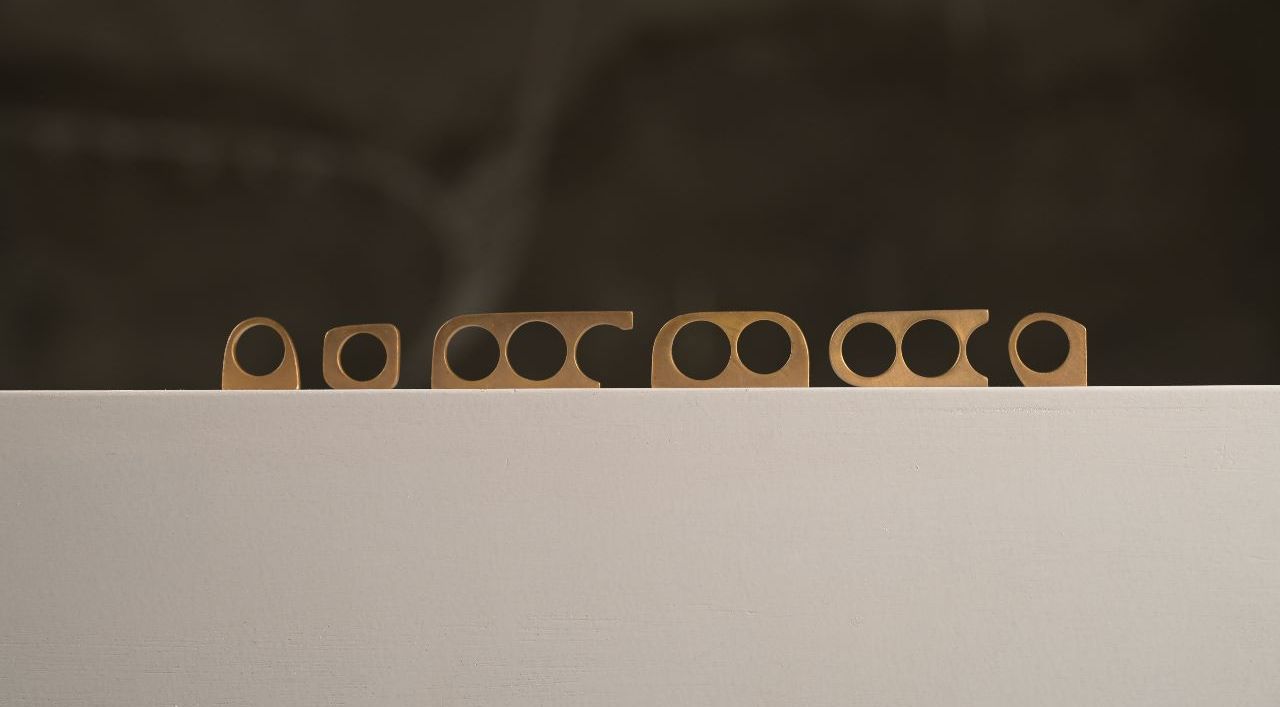
“The sensitive combination of curved lines and metal forms evokes the waves of the sea and the touch of the wind.”
Anisuzzaman Faroque’s Sculptures: The Harmony of Sea, Water and Wind
Lala Rukh Selim
The sculptures of Anisuzzaman Faroque seem to recall the story of his roots. Faroque is a son of Cox’s Bazar, and in each of his works we can find an echo of that origin. Since his student days, the water of the sea, the wind and even the scent of the coast appear to have found a place within his artistic practice.
His recent works continue along that same trajectory, oscillating with the rhythms of water and wind. The sensitive combination of rhythmic curved lines with the shapes and structures of metal sheets evokes the movement of sea waves and the touch of the wind. Through the interaction of lines and forms, a precise balance is created. The interplay between the forces of nature and organic structures is presented in Faroque’s works through a rhythmic visual language.
A notable characteristic of Faroque’s sculptures is the subtlety and sensitivity in his use of materials. These works are primarily constructed with metal. Some sculptures are made by welding iron rods, sheets and angles, while others combine bronze cast forms welded with iron. Alongside these, he has created several charcoal drawings that reflect the same sensibility found in his sculptural works.
Anisuzzaman Faroque’s journey of experimentation in the field of art demonstrates a significant level of maturity. It is hoped that this journey will continue and lead him toward new horizons in the future.
___ Lala Rukh Selim, Professor, Department of Sculpture, Faculty of Fine Art, University of Dhaka
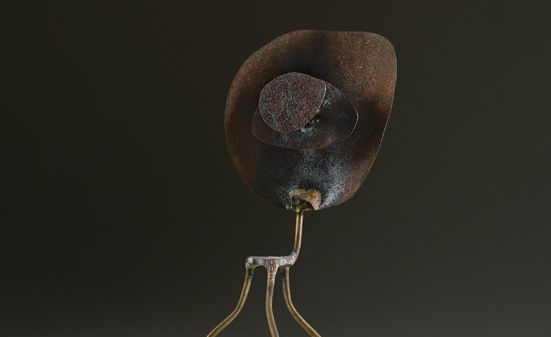
“His creative energy fills our hearts, almost as if it motivates us to be more imaginative in everything we do.”
Message
M. François Grosjean
We perceive a connection between everyday life and art in the work of Anisuzzaman Faroque, as well as a connection between art and nature. His creative soul takes its cues from nature and is able to carry on a clear and concise dialogue with the natural world around him. His art is also a method of expressing elements; for instance, we discover the moon in several of his works, which we find to be rather amusing. His creative energy fills our hearts, almost as if it motivates us to be more imaginative in everything we do.
___ M. François Grosjean, Director of Alliance Française de Dhaka